
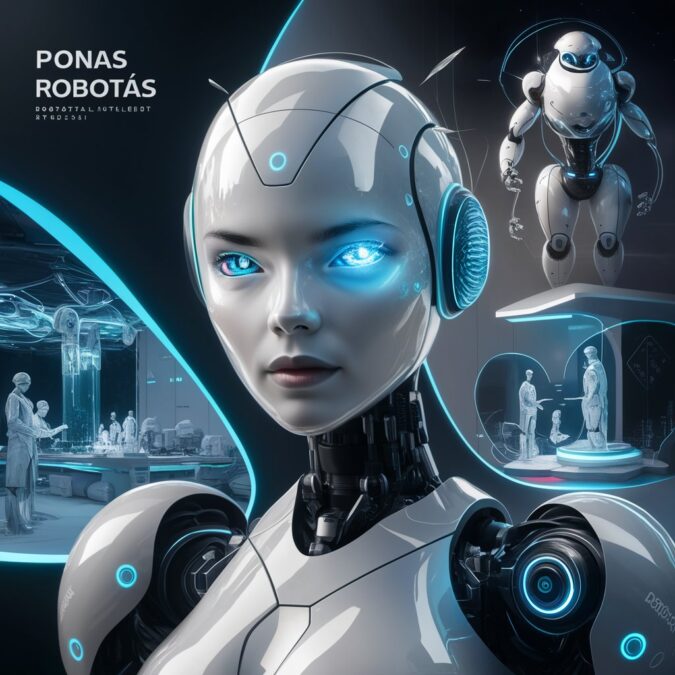

The term Ponas Robotas, meaning “Mr. Robot” in Lithuanian, symbolizes the growing presence of robotics and artificial intelligence (AI) in modern society. Once confined to science fiction, robots have now become an integral part of industries, homes, and even healthcare systems. The evolution of robot technology has been nothing short of revolutionary, blending mechanical engineering, computer science, and AI to create machines capable of performing complex tasks with precision and intelligence.
In today’s world, Ponas Robotas represents more than just a machine—it embodies the fusion of human creativity and technological advancement. From industrial robots that assemble cars to AI-powered robots that assist in surgeries or customer service, the field of modern robotics continues to expand at an unprecedented pace. This article explores the history, development, and future of Ponas Robotas, delving into how robotics technology and AI innovation are reshaping industries, economies, and human life.
The Evolution of Ponas Robotas: From Concept to Reality
The concept of Ponas Robotas dates back to the early 20th century when the word “robot” was first introduced by Czech writer Karel Čapek in his 1920 play R.U.R. (Rossum’s Universal Robots). The term described artificial beings created to serve humans—a vision that has since evolved into a global technological movement.
Early robots were simple mechanical devices designed to perform repetitive tasks. The first industrial robot, Unimate, was introduced in the 1960s and revolutionized manufacturing by automating assembly lines. Over time, advancements in computing, sensors, and artificial intelligence transformed these machines into intelligent systems capable of learning, adapting, and interacting with humans.
Today, Ponas Robotas represents a new generation of AI robots that combine mechanical precision with cognitive intelligence. These machines can analyze data, recognize patterns, and make decisions autonomously. From humanoid robots that mimic human behavior to autonomous drones and robotic assistants, the evolution of robotics technology continues to blur the line between man and machine.
The Role of Artificial Intelligence in Modern Robotics
Artificial intelligence is the driving force behind the rise of Ponas Robotas and the new era of robot innovation. AI enables robots to process information, learn from experience, and perform tasks that once required human intelligence. Through machine learning algorithms, neural networks, and natural language processing, AI robots can now understand speech, recognize faces, and even predict human needs.
In industrial settings, AI-powered robots optimize production by analyzing real-time data and adjusting operations for maximum efficiency. In healthcare, robotic systems assist surgeons with precision procedures, reducing recovery times and improving patient outcomes. In customer service, humanoid robots equipped with AI can interact naturally with people, providing information and support in multiple languages.
The integration of AI and robotics has also led to the development of autonomous robots capable of navigating complex environments without human intervention. Self-driving cars, delivery drones, and robotic vacuum cleaners are just a few examples of how Ponas Robotas is transforming everyday life through intelligent automation.
Applications of Ponas Robotas in Modern Society
The applications of Ponas Robotas span across nearly every sector, demonstrating the versatility and potential of robotics technology.
1. Industrial Automation
In manufacturing, robots have become indispensable. They perform tasks such as welding, painting, and assembly with unmatched speed and accuracy. Industrial robots reduce production costs, increase efficiency, and ensure consistent quality. The rise of collaborative robots (cobots)—machines designed to work safely alongside humans—has further enhanced productivity in factories worldwide.
2. Healthcare and Medicine
In the medical field, AI robots are revolutionizing patient care. Surgical robots like the da Vinci system allow doctors to perform minimally invasive procedures with enhanced precision. Robotic prosthetics and exoskeletons help patients regain mobility, while AI-driven diagnostic robots assist in detecting diseases earlier and more accurately.
3. Service and Hospitality
Ponas Robotas has also entered the service industry, where robots are used in hotels, restaurants, and retail stores. They greet customers, deliver food, and provide information, improving efficiency and customer experience. In Japan and South Korea, humanoid robots are even used as caregivers for the elderly, offering companionship and assistance.
4. Education and Research
Educational robots are helping students learn coding, engineering, and problem-solving skills. Universities and research institutions use robotics technology to explore new frontiers in AI, automation, and human-robot interaction.
5. Space Exploration and Defense
In space exploration, Ponas Robotas plays a crucial role in missions that are too dangerous for humans. Robotic rovers like NASA’s Perseverance explore Mars, collecting data and conducting experiments. In defense, autonomous drones and robotic systems enhance surveillance, logistics, and disaster response capabilities.
The Future of Ponas Robotas: Innovation and Ethical Challenges
The next generation of AI robots will not only perform physical tasks but also engage in emotional and social interactions, bridging the gap between humans and machines.
However, this rapid progress also raises ethical and societal questions. The increasing automation of jobs has sparked debates about employment and economic inequality. The use of AI robots in surveillance and warfare raises concerns about privacy and accountability. As Ponas Robotas becomes more integrated into daily life, it is essential to establish ethical frameworks that ensure technology serves humanity responsibly.
Despite these challenges, the potential benefits of robot innovation are immense. From improving healthcare and education to addressing climate change and disaster management, Ponas Robotas has the power to enhance human life in countless ways. The key lies in balancing technological advancement with ethical responsibility and human values.
Conclusion
Ponas Robotas stands as a symbol of human ingenuity and the limitless potential of robotics and artificial intelligence. What began as a mechanical concept has evolved into a sophisticated field that touches every aspect of modern life. From industrial automation to healthcare, education, and space exploration, robot technology continues to redefine what is possible.
As we move toward a future where AI robots become everyday companions and collaborators, the challenge will be to harness their power for the greater good. The story of Ponas Robotas is not just about machines—it is about humanity’s quest to innovate, adapt, and coexist with intelligent technology. The future of robotics is here, and it promises to be as transformative as it is inspiring.
Frequently Asked Questions (FAQ)
1. What does Ponas Robotas mean?
“Ponas Robotas” translates to “Mr. Robot” in Lithuanian and symbolizes the rise of intelligent machines and robotics technology.
2. What is the role of AI in modern robotics?
Artificial intelligence enables robots to learn, adapt, and make decisions autonomously, allowing them to perform complex tasks with human-like intelligence.
3. How are robots used in industry?
Industrial robots are used for assembly, welding, packaging, and quality control, improving efficiency and reducing human error.
4. What are AI robots?
AI robots are machines equipped with artificial intelligence that allows them to process data, recognize patterns, and interact intelligently with humans.
5. How is Ponas Robotas used in healthcare?
In healthcare, robotics technology assists in surgeries, rehabilitation, diagnostics, and patient care, improving precision and outcomes.
6. What are collaborative robots (cobots)?
Cobots are robots designed to work safely alongside humans, enhancing productivity in manufacturing and logistics.
7. What are the ethical concerns about robotics?
Key concerns include job displacement, privacy, security, and the potential misuse of AI in surveillance or warfare.
8. How do robots impact the economy?
Robots increase productivity and innovation but may also disrupt traditional employment patterns, requiring new skill development.
9. What is the future of Ponas Robotas?
The future involves more intelligent, autonomous, and emotionally aware robots that integrate seamlessly into human life.
10. How can robotics benefit humanity?
Ponas Robotas can improve healthcare, education, environmental protection, and disaster response, making life safer and more efficient.